
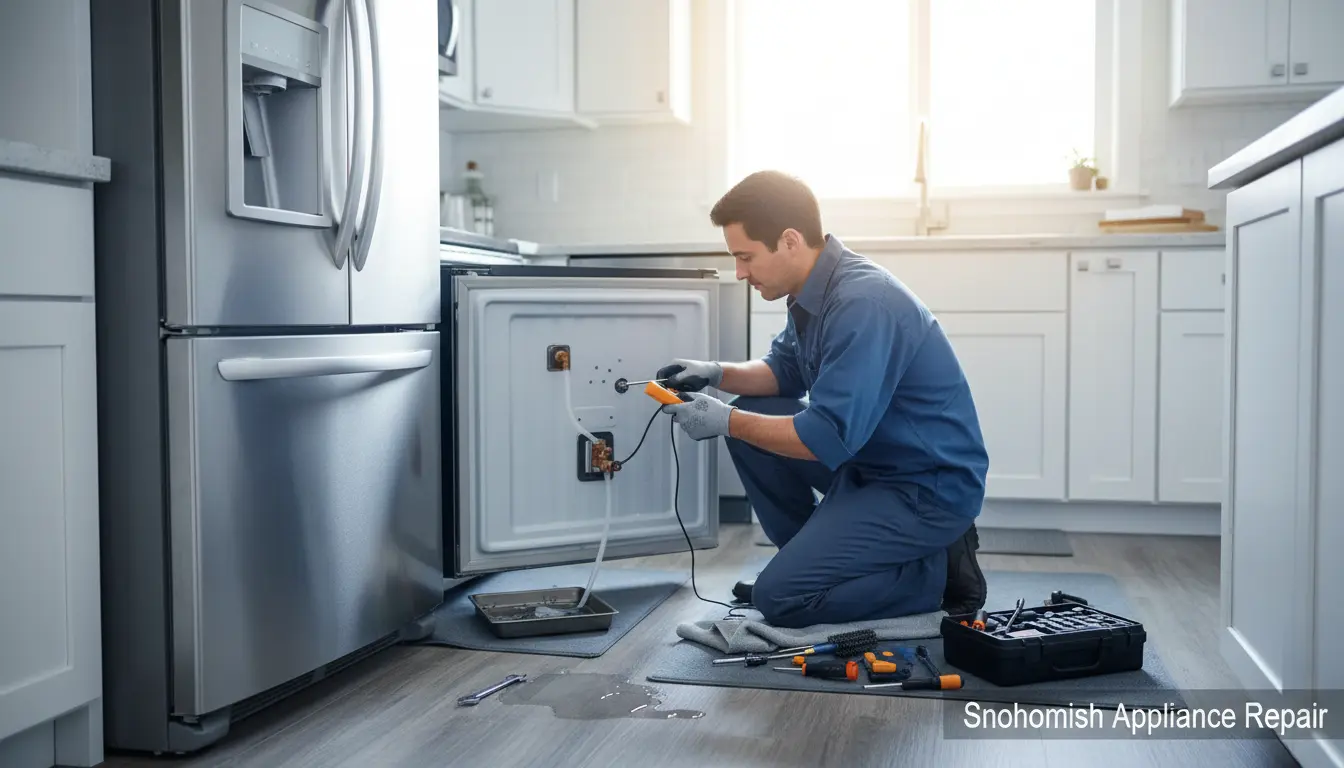
Is your refrigerator turning your kitchen floor into an unwanted indoor pool? A leaky fridge can be a major headache, leading to slippery hazards, wasted energy, and spoiled food. If you’re in Snohomish and dealing with this frustrating issue, you’re not alone—our local climate’s humidity can exacerbate appliance woes. At Snohomish Appliance Repair, we’ve seen it all, from minor drips to full-blown floods. But before you panic, this ultimate guide will walk you through diagnosing and fixing leaky refrigerators at home. With practical, step-by-step advice, you’ll learn how to tackle the problem yourself or know when it’s time to call in the experts. Let’s get your fridge back to chill mode without the mess!
Understanding Why Your Refrigerator is Leaking
Before diving into fixes, it’s crucial to pinpoint the cause. Refrigerators leak for several reasons, often related to everyday wear and tear or simple oversights. In Snohomish’s variable weather, excess moisture from the air can play a role, but most issues stem from internal components.
Common Causes of Refrigerator Leaks
- Clogged Defrost Drain: The defrost system melts ice buildup, but if the drain clogs with food debris or mineral deposits, water backs up and leaks out the front.
- Damaged Door Seals: Worn-out gaskets let warm, humid air in, causing condensation that drips down.
- Faulty Water Line or Ice Maker: For fridges with dispensers, a cracked line or loose connection can cause leaks.
- Leveling Issues: If your fridge isn’t level, water from the drip pan can spill over.
- Overfilled Drip Pan: This pan collects condensation, but if it’s full, it overflows.
Identifying the source is half the battle. Grab a flashlight and towel, and inspect the back, bottom, and interior for clues.
Step-by-Step DIY Fixes for Leaky Refrigerators
Armed with basic tools like a screwdriver, pliers, and some baking soda, you can often resolve leaks without a service call. These steps are safe for most models, but always unplug your fridge first for safety.
1. Clear the Defrost Drain
The defrost drain is a common culprit. Located at the back of the freezer compartment, it’s a small hole that channels meltwater to the drip pan.
- Step 1: Empty the freezer and remove shelves for access.
- Step 2: Mix a solution of warm water and baking soda (1 tablespoon per cup).
- Step 3: Use a turkey baster or pipe cleaner to flush the drain. Pour the solution down slowly to dissolve clogs.
- Step 4: Run a cycle of hot water to ensure it’s clear.
In Snohomish homes, where hard water is prevalent, add white vinegar to the mix for extra mineral-busting power. This fix often stops leaks within hours.
2. Inspect and Clean Door Seals
Door seals (gaskets) prevent air leaks, but they can crack over time.
- Step 1: Check for gaps by closing the door on a dollar bill—if it pulls out easily, the seal is bad.
- Step 2: Clean seals with a mild soap solution and a soft cloth to remove grime.
- Step 3: For minor damage, apply silicone sealant; replace if torn (kits cost under $20).
Pro tip: In our humid Snohomish summers, seals wear faster—regular cleaning extends their life.
3. Check the Water Line and Ice Maker
If your fridge has a water dispenser, leaks might come from the supply line.
- Step 1: Turn off the water valve behind the fridge.
- Step 2: Disconnect and inspect the line for kinks or cracks.
- Step 3: Reconnect tightly and test for drips.
For ice maker issues, ensure the fill tube isn’t frozen. If you’re handy with leaks in other appliances, our washing machine leak fix services can provide similar insights, but for fridges, this DIY usually suffices.
4. Level Your Refrigerator and Empty the Drip Pan
An unlevel fridge causes water to pool unevenly.
- Step 1: Use a bubble level on top to check.
- Step 2: Adjust the front feet (turn clockwise to raise) until balanced.
The drip pan, under the fridge, needs emptying every few months.
- Pull out the fridge, locate the pan (often near the compressor), and clean it with soap and water.
In areas like Maltby near Snohomish, where homes might have uneven floors, leveling is especially important.
When to Call Professional Help
DIY fixes are great, but some leaks signal bigger problems like a failed evaporator fan or compressor issues. If water persists after these steps, or if you notice electrical smells or unusual noises, it’s time for pros.
At Snohomish Appliance Repair, we specialize in quick diagnostics for local residents. Serving Cathcart and surrounding spots, our technicians arrive same-day with genuine parts. Don’t risk further damage—leaks can lead to mold in your Snohomish kitchen.
For related maintenance, consider our dryer vent cleaning to prevent moisture buildup elsewhere in your home.
Preventive Maintenance Tips to Avoid Future Leaks
Prevention beats cure. Keep your fridge leak-free with these habits:
- Clean coils monthly: Dust on condenser coils makes the fridge work harder, increasing condensation.
- Monitor humidity: Use a dehumidifier in damp basements, common in Mill Creek.
- Schedule annual checkups: Like our range hood fan service, regular fridge tune-ups catch issues early.
- Avoid overloading: Don’t block vents with food, as it causes uneven cooling and drips.
In Snohomish’s rainy seasons, these steps are vital to combat excess moisture.
FAQ: Common Questions About Leaky Refrigerators
Why is my refrigerator leaking water inside?
This often points to a clogged defrost drain or overflowing drip pan. Follow our drain-clearing steps, and if it continues, check the thermostat settings—too low can cause frost buildup.
Is it safe to fix a leaky fridge myself?
Yes, for basic issues like cleaning drains or seals. But if it involves electrical parts or refrigerant lines, call professionals to avoid hazards.
How much does professional refrigerator repair cost in Snohomish?
Costs range from $100–$300 depending on the issue. At Snohomish Appliance Repair, we offer free estimates for locals in Sunnyside and beyond.
Can a leaky fridge cause mold?
Absolutely—standing water breeds mold quickly. Dry areas promptly and fix leaks ASAP to protect your health.
How often should I replace refrigerator door seals?
Every 5–10 years, or sooner if you notice gaps. Regular cleaning can extend their life.
Conclusion: Keep Your Snohomish Kitchen Dry and Efficient
A leaky refrigerator doesn’t have to disrupt your life. With this guide, you’ve got the tools to diagnose, fix, and prevent issues right at home. From clearing clogs to checking seals, these actionable steps can save you time and money. But remember, for complex problems or peace of mind, trust the experts at Snohomish Appliance Repair. We’re your local go-to for reliable service in Snohomish and nearby areas like Maltby and Cathcart.
Ready to stop the drip? Contact Snohomish Appliance Repair today for a free consultation. Schedule your appointment online or call us—your dry kitchen awaits!